
In the southern part of Madagascar, “Raketa” (Opuntia) plant is more than just part of the landscape, it is a vital source of life, protecting species from deadly dehydration. In this arid region, ecosystems are under increasing pressure due to climate change, prolonged droughts, and land degradation. Among the most vulnerable species is the Sokake (land tortoises), a critically endangered tortoise endemic to Madagascar, whose survival depends heavily on access to water, shade, and natural food sources.
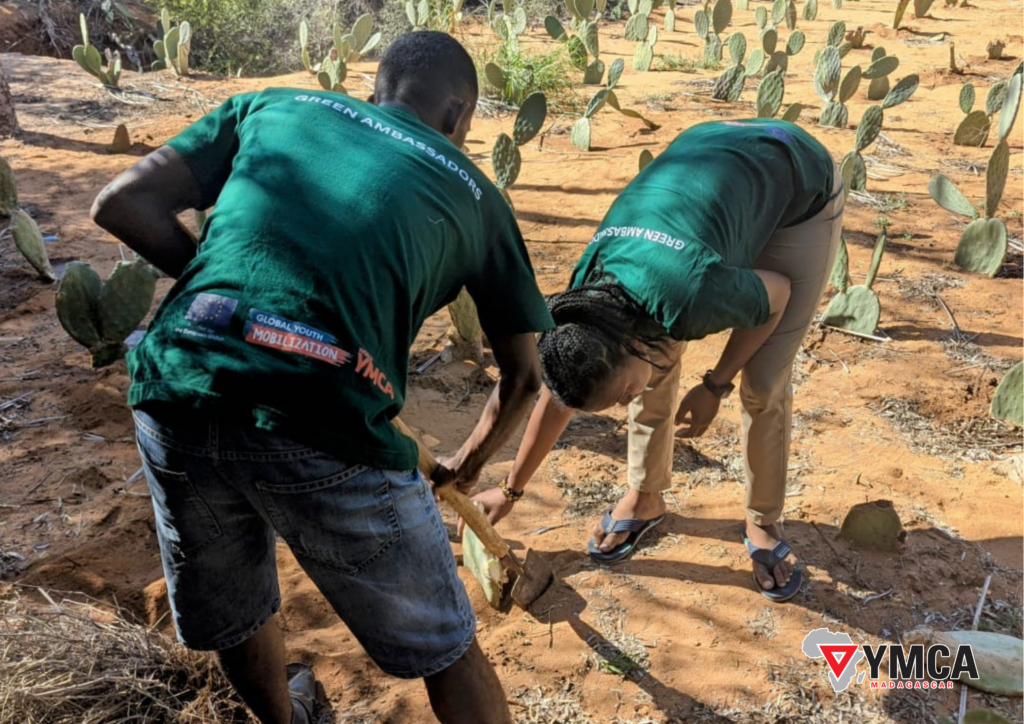
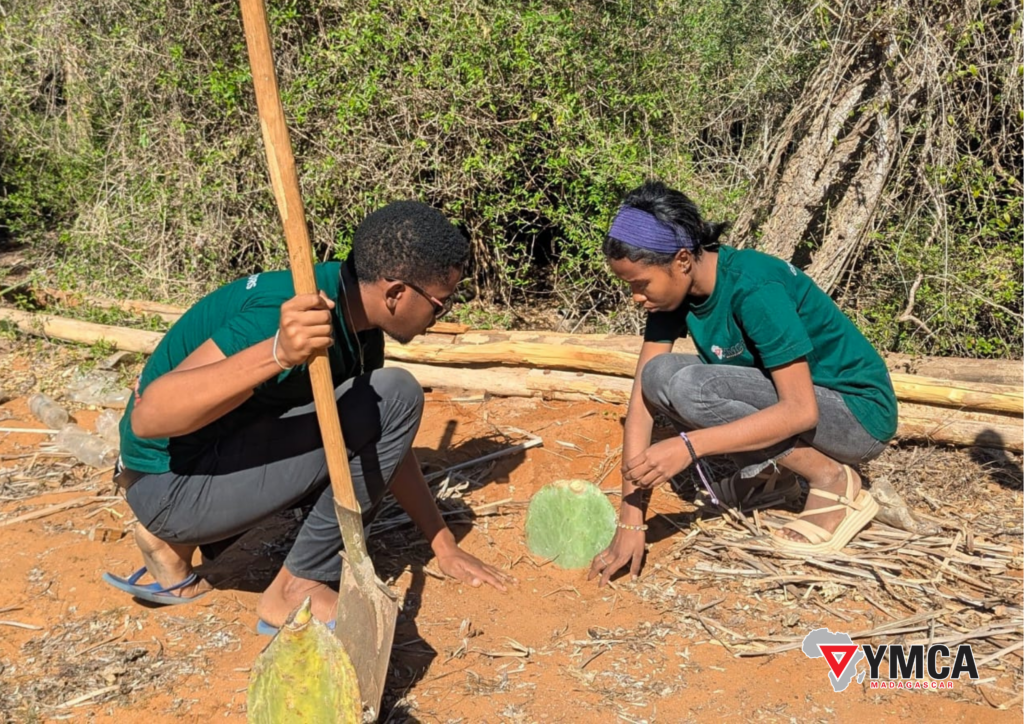
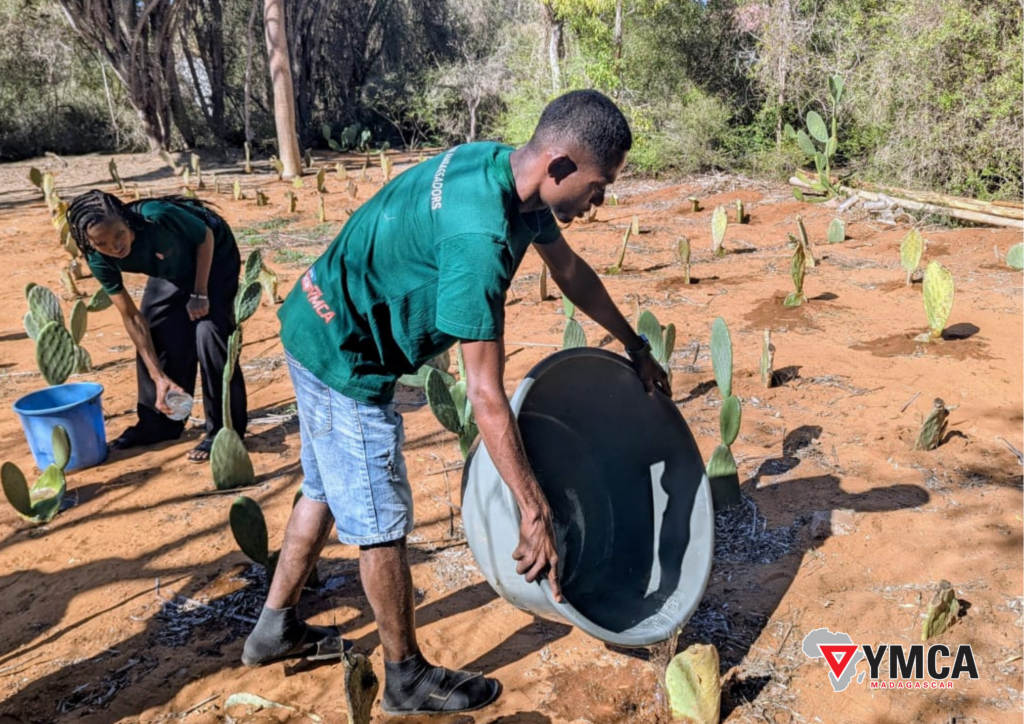
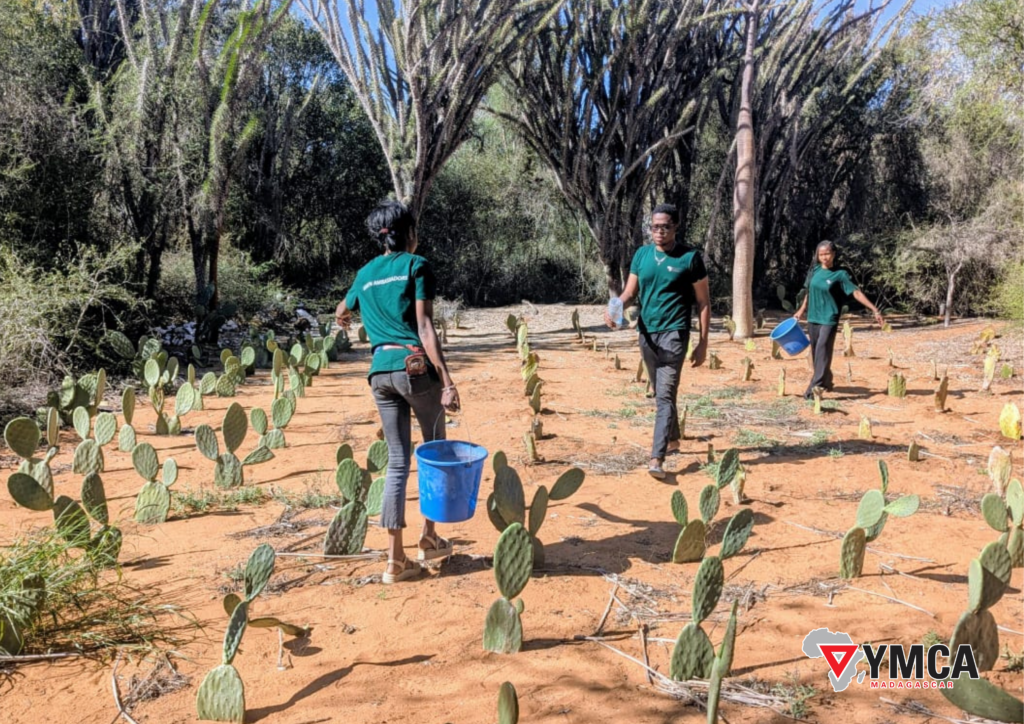
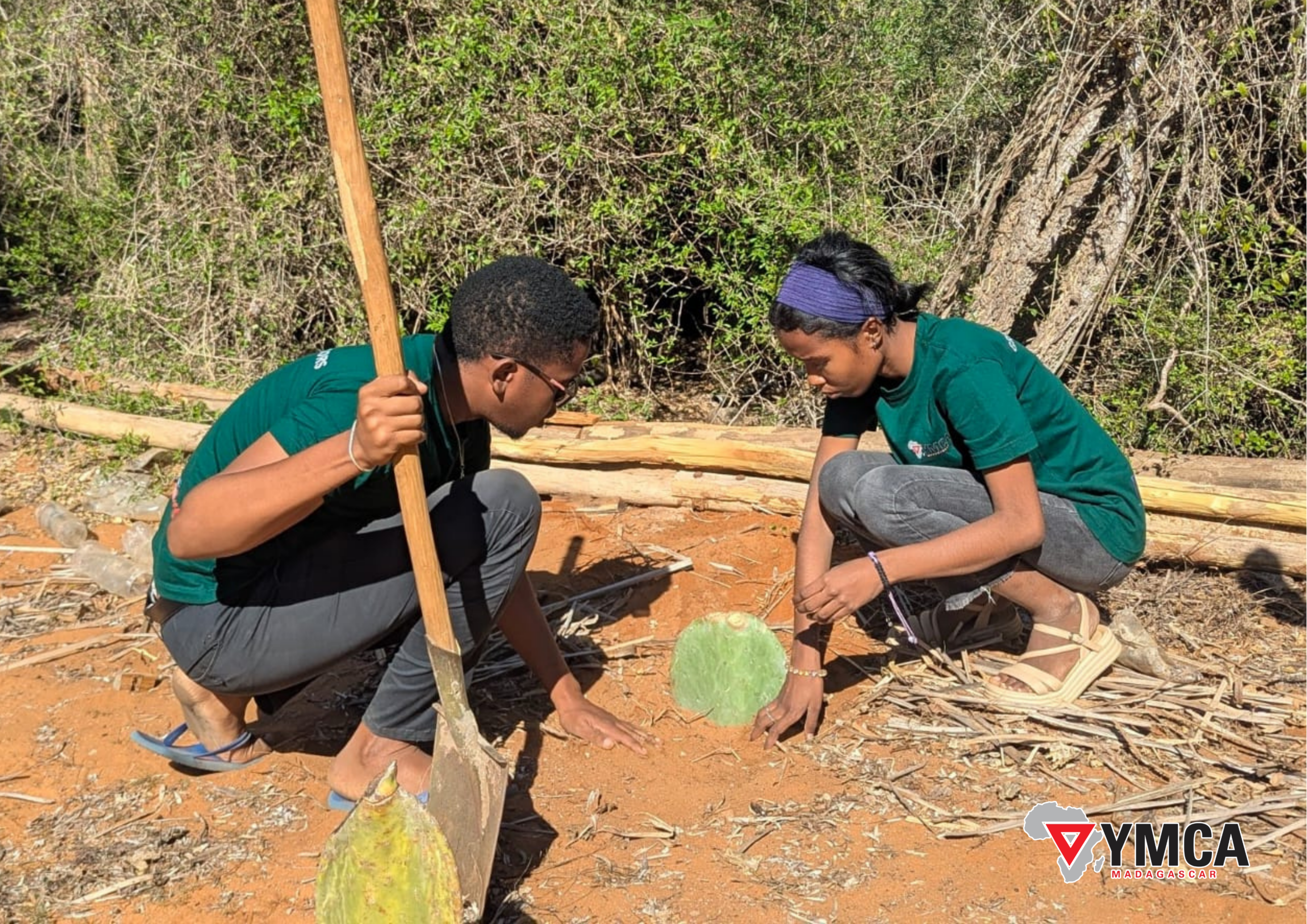
In response to the climate challenge in Toliara, hundreds of Raketa have been planted by our young Green Ambassadors at the Tortoise Village “Tanà ty Sokake” in Mangily. This site plays a crucial role in the conservation of the Sokake, offering a protected environment where restoration efforts directly contribute to the species’ survival.
What does this change specifically?
- Sustainable water autonomy: once rooted, these plants become a natural water reserve. Tortoises can hydrate and feed without relying on external resources.
- Vital cooling zones: as they grow, Raketa creates shade and lowers ground temperature, protecting tortoises from extreme heat.
- Strengthened nutrition: rich in calcium and fiber, it supports shell strength and digestive balance, ensuring a fully natural and sustainable food source.
Planting Raketa helps bring life back to a fragile environment. Little by little, vegetation returns, the soil stabilizes, and the ecosystem begins to regain its balance, creating better conditions not only for the Sokake, but for all living species in the area.
This initiative shows that young people are not just facing climate change; they are stepping forward to lead solutions and take action, a concrete step toward protecting Madagascar’s unique biodiversity and ensuring that the Sokake continues to survive for generations to come.