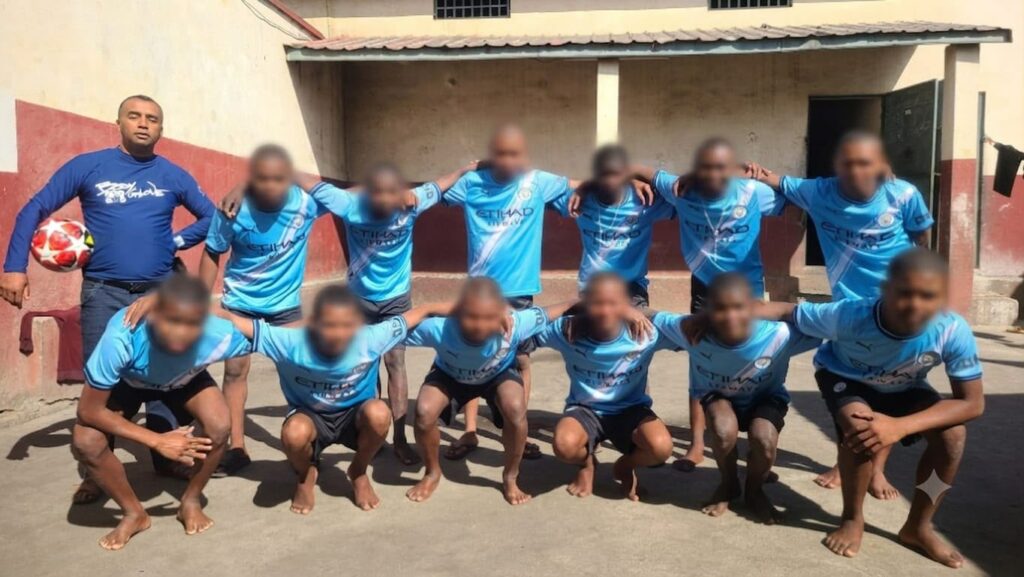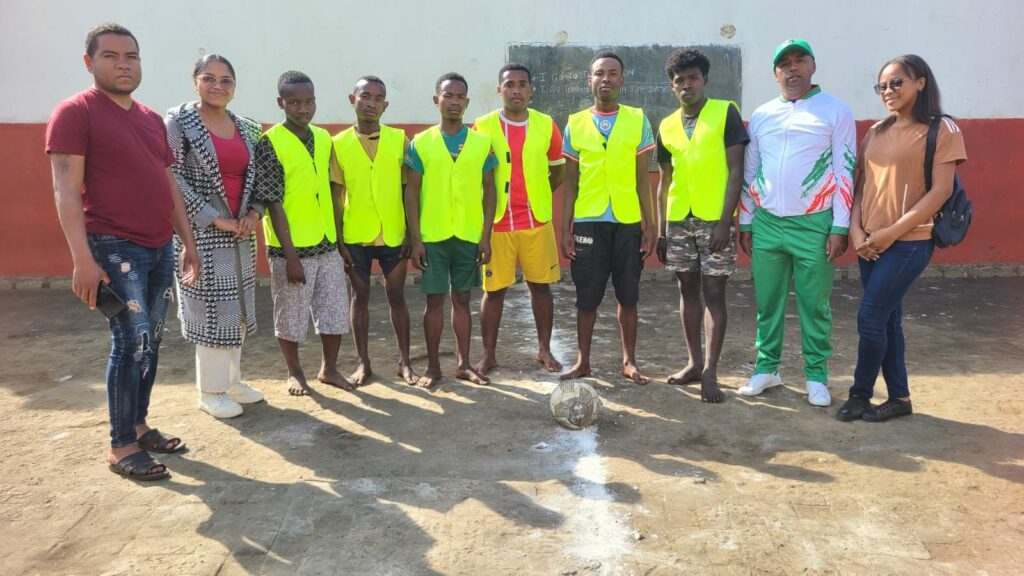
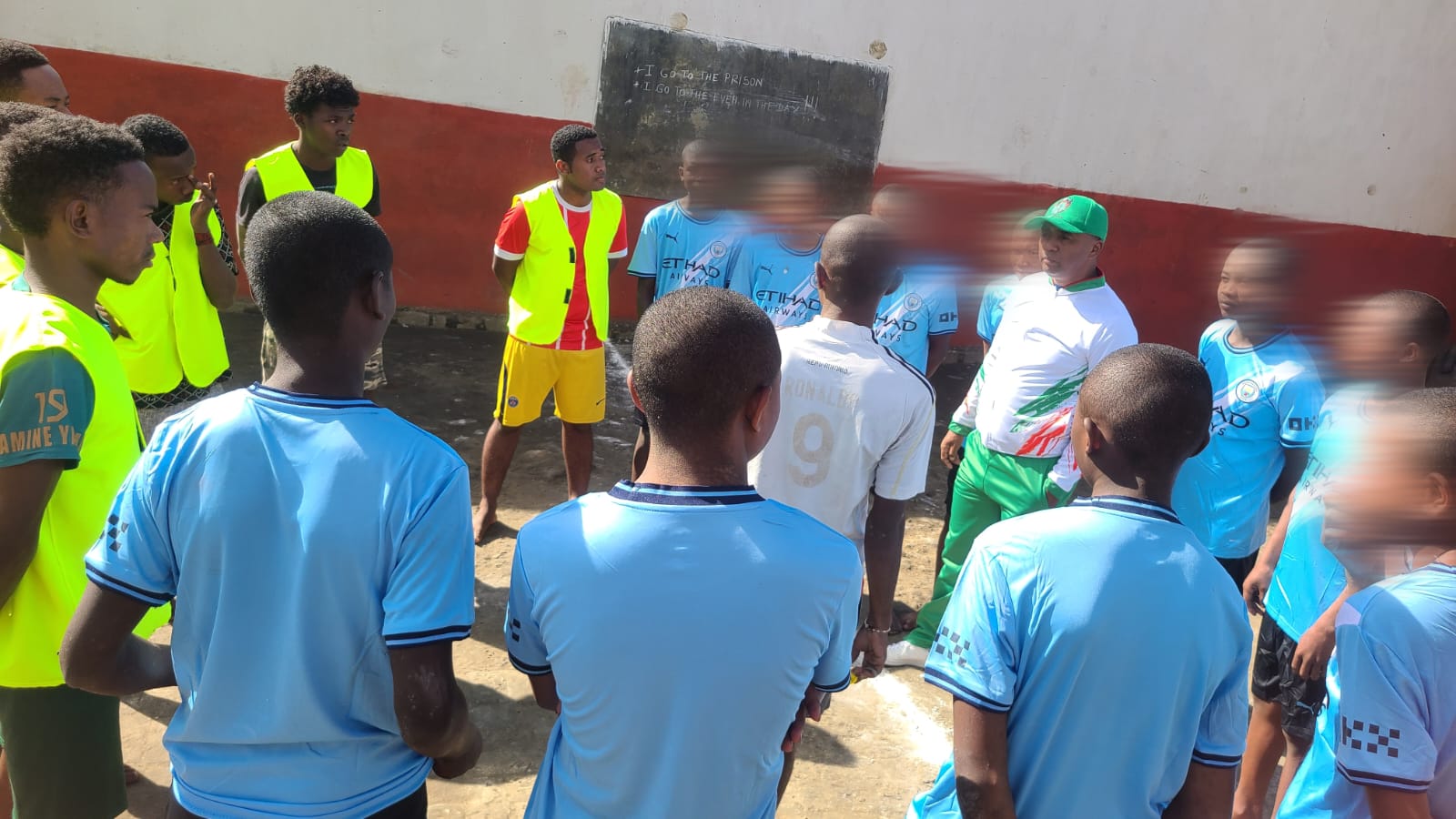

For young people in vulnerable situations, sport can become a powerful tool for social transformation. At the Moramanga Central Prison, young people in conflict with the law received psychosocial support through a football activity with young members of YMCA Moramanga.
Why does this matter?
Faced with complex life experiences and psychological vulnerabilities, these young people need guidance, a listening ear, and opportunities to rebuild their confidence and prepare for the future. Through this sport-based activity, they were able to:
- Gradually rebuild their self-confidence
- Reduce the feeling of isolation often associated with confinement
- Reconnect with others in a safe and supportive environment
- Develop emotional and social skills
In this context, sport acts as a catalyst for positive change : helping release tension, encourage self-expression, and promote overall well-being.
Each action contributes to:
- Supporting young people’s social reintegration
- Strengthening social and behavioral skills
- Promoting inclusive and sustainable development approaches
- Creating opportunities for young people to rebuild their relationships with themselves and others
The impact extends beyond individuals, contributing to stronger and more inclusive communities. In environments where psychosocial challenges are significant, sport proves to be an accessible, effective, and sustainable approach. Far beyond leisure, sport becomes a structured tool for change — helping transform behaviors, restore dignity, and open new perspectives for the future.
Investing in these initiatives means giving every young people the opportunity to rebuild, move forward, and reclaim their place in society.
Photos Source: [Mino Haritsimba Rakotonindriana]